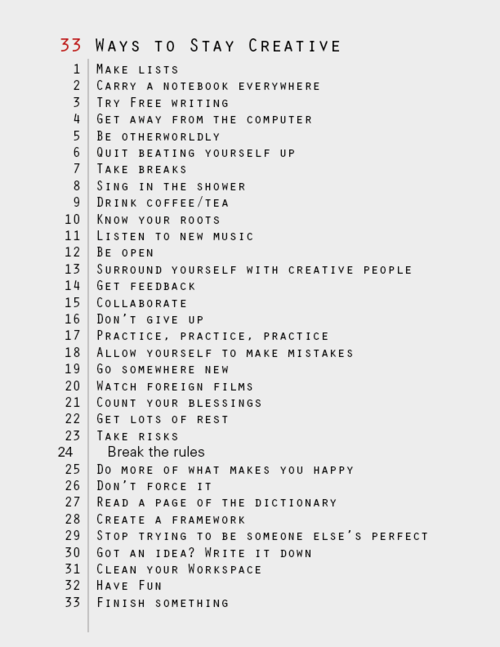
You guys, it's the last 30 Pitches in 30 Days Friday post! The finish line is Right. There. High-fives and brofists to my amazing participants Margo and Katherine Owens!
I think the most important thing this whole exercise has taught me is that you have to make the time. My last minute pitches look just that: last minute. Sure, last night's ditch attempt to come up with anything at all, holy crap I am so tired, actually led to something kind of interesting, but that was the clear exception to the rule. The thing about this blogfest is that when you compare the pitches, or even just the snippets of ideas, I've come up with in the past four weeks to, say, the past six months, there's a definite imbalance in idea production.
I'll say it again, nice and loud: make idea production a priority. A fun priority, sure, but a priority nonetheless. It shouldn't be something you squeeze into your week when you're in bed on Sunday night; it should be a part of your schedule. Maybe not weekly, but for the sake of your idea muscle, set aside time to just play.
I'm pretty sure it wasn't a passion for building a platform and finding your market that made you want to be a writer. It was probably reading a book that made an impression on you and wanting to tell a story that would excite other people as much. So get excited! Read Margo's post about including your passion in your pitches and throw all your loves in the blender, and see what happens. Follow KO's suggestion to think way outside the box to stretch the idea muscle and get beyond your comfort zone. In the words of Nike, just do it. Sit down with your laptop or notebook and actively chase down ideas. Don't let 'the muse' take credit for your imagination!
My pitch for the week: After her neighbour dies and no-one notices for days, a single thirty-something starts a blog about her weekly dates intending to be in a relationship within six months or admit defeat.
Showing posts with label 30 Pitches in 30 Days Blogfest. Show all posts
Friday, 28 October 2011
Wednesday, 26 October 2011
30 Pitches Pitstop #4
Finally, for those times when you really can't summon up an idea out of thin air, Holly Lisle shows you how to legally and ethically steal ideas. Basically you think of stories -- and not just those in novel format -- that get you really excited, and you figure out what it was about them that stirred up those feelings. And you keep whittling it down until you get to the core, the character type or theme that you can use as the bare foundation for your own take on the subject. You may not be able to rewrite Twilight, but you can write your own story of forbidden and/or dangerous love, with different characters and a new setting, and play with it until no-one would know you took inspiration from something that had already been done. Easy.
This week's three (condensed) tips from James Scott Bells's top twenty ways to get plot ideas in Plot & Structure:
- What I Really Want to Write About Is. . . First thing in the morning, when you've just shaken off sleep, freewrite on the things you'd like to write about. By doing it early your subconscious should still be switched on, and you'll find yourself tuning out your critic and reaching for ideas that you're genuinely passionate about.
- Obsession. "Create a character. Give her an obsession. Watch where she runs." Think Ahab and Moby Dick, Dorian Gray and youth. People will do crazy things for their obsessions.
- Mindmap. Start with a word (a chosen concept or theme or something completely random) and let your mind go where it will. You can come up with all kinds of weird associations as one thing leads to another.
Friday, 21 October 2011
Third Friday Check-In
"Don't let the perfect be the enemy of the good." Voltaire.
I am so guilty of this. You'd think when trying to come up with 30 pitches in 30 days I'd be taking anything I could get, but I still find myself dismissing ideas as bad without giving them a chance. Really, there are no bad ideas, only ones that have been overused or undercooked. The orphan prophesied to defeat evil who we watch as he struggles through the training that will prepare him for the final epic battle? Sure, if you want to leave your idea at that, you're in cliche territory. Give the boy a lightsabre or a wand and now we're talking about completely different worlds and stories. It's what you do with the raw material that decides whether the idea is 'good' or 'bad'. Ever heard that saying only boring people get bored? Well only lazy thinkers have bad ideas. Everyone else just has ideas that haven't been played with enough.
I haven't been doing enough playing. I want brilliant, high concept ideas, and I want them without having to look at lame ideas from a million different angles. Lazy thinking, Self. One of Laura Pauling's suggestions in her blog post about how to choose the best idea includes the tip to look for ways to make the idea bigger. Like I mentioned on Wednesday, Across the Universe is a small town mystery set in space. Just by changing the setting, making it bigger and more unusual, we're getting away from cliche territory.
Of course, you can always 'cheat' like me. I keep coming back to paranormal/fantasy ideas, people with unusual abilities, and then think about how that would f*ck up their lives. What would be good about this power, what would be bad, who wouldn't want it, who would do anything to have it? Even when you start out from a high concept idea -- say, a girl who can see death -- you still have to brainstorm the pants off of it to get the idea off the ground. If her ability doesn't come into play in the story at all, what's the point of having it there? And if it only ever helps her, well, who wants to read about that?
And just because it was a weird and awesome coincidence, check out Janice Hardy's post on pitches where she uses the Wizard of Oz as an example and also hits on my point from last week that your pitch should give you ideas about what will happen, aka you should be able to visualise the book from one sentence.
My pitch for the week: Sent to a boarding school that promises to make her a lady, rebellious Noelle doesn't expect to become another girl entirely, but when a spirit possesses her body she must delve into the school's dark history or remain a permanent host.
Don't forget to check out how Margo and KO are doing this week, too!
I am so guilty of this. You'd think when trying to come up with 30 pitches in 30 days I'd be taking anything I could get, but I still find myself dismissing ideas as bad without giving them a chance. Really, there are no bad ideas, only ones that have been overused or undercooked. The orphan prophesied to defeat evil who we watch as he struggles through the training that will prepare him for the final epic battle? Sure, if you want to leave your idea at that, you're in cliche territory. Give the boy a lightsabre or a wand and now we're talking about completely different worlds and stories. It's what you do with the raw material that decides whether the idea is 'good' or 'bad'. Ever heard that saying only boring people get bored? Well only lazy thinkers have bad ideas. Everyone else just has ideas that haven't been played with enough.
I haven't been doing enough playing. I want brilliant, high concept ideas, and I want them without having to look at lame ideas from a million different angles. Lazy thinking, Self. One of Laura Pauling's suggestions in her blog post about how to choose the best idea includes the tip to look for ways to make the idea bigger. Like I mentioned on Wednesday, Across the Universe is a small town mystery set in space. Just by changing the setting, making it bigger and more unusual, we're getting away from cliche territory.
Of course, you can always 'cheat' like me. I keep coming back to paranormal/fantasy ideas, people with unusual abilities, and then think about how that would f*ck up their lives. What would be good about this power, what would be bad, who wouldn't want it, who would do anything to have it? Even when you start out from a high concept idea -- say, a girl who can see death -- you still have to brainstorm the pants off of it to get the idea off the ground. If her ability doesn't come into play in the story at all, what's the point of having it there? And if it only ever helps her, well, who wants to read about that?
And just because it was a weird and awesome coincidence, check out Janice Hardy's post on pitches where she uses the Wizard of Oz as an example and also hits on my point from last week that your pitch should give you ideas about what will happen, aka you should be able to visualise the book from one sentence.
My pitch for the week: Sent to a boarding school that promises to make her a lady, rebellious Noelle doesn't expect to become another girl entirely, but when a spirit possesses her body she must delve into the school's dark history or remain a permanent host.
Don't forget to check out how Margo and KO are doing this week, too!
Wednesday, 19 October 2011
30 Pitches Pitstop #3
![]() |
| Source |
Janice Hardy's Tips on Plotting Your Novel gives a list of questions to ask yourself depending on whether your starting point, the seed from which you'll grow a plot, is a setting, an event or situation, a personal journey, a premise or idea, or a character. Because asking questions -- what if, and why, and who -- is how you'll build from something small and possibly unoriginal to an actual story. I think I may have mentioned that before. Remember my
This week's three (condensed) tips from James Scott Bells's top twenty ways to get plot ideas in Plot & Structure:
- Flip a Genre. Star Wars has Western themes in space (the bar-fight scene, anyone?) and, more recently, Across the Universe takes a small town mystery and similarly sets it in space.
- Predict a Trend. Not trends in the publishing world but those in the real world. Check out specialty magazines and see what's happening with new technology, new scientific discoveries, then find the story in it. Just look at the way the origin stories of comic book superheroes evolved with technology: radioactive spills, then mutated DNA, now it's all high-tech gadgets and robotic bodysuits (robosuits? If that's not a thing, dibs).
- Noodling the Newspaper: Read all the sections of a variety of tabloids -- global news, local, sports, celebrity scandal, obituaries, want ads -- and ask what-if.
Friday, 14 October 2011
Second Friday Check-In
My second epiphany came when I realised that it's all well and good for me to write a pitch with a protagonist, an objective, and an opponent, but if the pitch doesn't inspire ideas of what my protagonist could actively do to achieve their objective, I probably have a fairly lacklustre plot on my hands.
Take for instance Pan's Labyrinth. That could be pitched as 'what if the god of the underworld's daughter strayed to the surface and was lost there?' There's a protagonist (the god of the underworld's daughter), an objective (she's lost on the surface and probably wants to go back), and opposition (an external malevolent world). But that doesn't suggest how she's actually going to get back. So we give our girl an active role in the story:
"A daydreamer in civil-war era Spain must pass three tests set by a malevolent faun to prove she is the god of the underworld's lost daughter and reclaim her rightful place."
Now you can picture at least three scenes because we know she has to take three tests. There should probably be a scene to show the world she lives in trying to crush her spirit as well as one revealing the danger around her so that we know why she'd want to believe there was a better life just waiting for her to claim it-- no matter the risk. Then raise the stakes, give her something to tie her to the world and give her second thoughts: give her an adoring mother who fosters her imagination and shelters her from the big bad world. Give her a baby brother who she can adore and shelter herself. So now we need scenes demonstrating the internal struggle, happy family scenes that she'd have to leave behind. And then an ultimatum scene where we force her to choose.
That's like ten scenes right there. We've got internal problems (she wants to escape but she loves her family), interpersonal problems (someone has to be doing the dream smashing), and external problems (hello, civil war). We've got a story. And all those scenes came from the information we get from the extended edition pitch. The original pitch has a cool premise, but it's not going to help you get a story written because we don't get any hints how our girl is going to get home. Is she going to buy a map and find the X marking the entrance to the underworld? Is she going to wait around for her daddy to come get her and fall in love with a boy on the surface and then have to decide whether to go or stay?
That second idea is a test. It sounds like a story, there's all that cool extra information about the boy, but see how she still isn't actually doing anything? Dad comes to find her, she likes a boy, she makes a decision. Those aren't things you can show your character doing. You couldn't write a stage direction for an actor where 'you make a decision'. Maybe daddy does find her, but the story starts when our girl, who likes a boy from the surface, which is great but a static position, tries to convince her boy to come with her. Now she has something to physically do. You can show her trying to talk him into it-- you love me don't you, you'll live forever, no more homework. Show her trying and failing to distance herself from him and then recommitting to the idea that she can't leave him. Show her pushing away loved ones, the family she'd have to leave, and her guilt when they keep coming back. Does she start getting sneaky, pointing out how bad the boy's life is, how much better off he'll be in the underworld? Does she start to convince herself he'd be better off there and take matters into her own hands, start planning to send him to the underworld the old fashioned way and hope he forgives her when they're together again? And then of course there has to be a cute scene where they're blissfully happy and unaware that shit's about to get real, before the I'm-your-father revelation, plus the revelation scene itself, and a later acceptance scene.
So that's a problem I keep bumping against: neat backstory or neat premise, but essentially my protagonist doesn't have much to do to achieve his/her objective. Take last week's pitch:
"After a failed suicide attempt, a social outcast sees the oncoming death of the boy who pushed her over the edge, and who she loves, and must choose whether to risk the nuthouse to warn and possibly save him."
I state right there in the pitch that basically all she has to do is decide whether to warn the boy he's about to die, and then either warn him or not. If we skip the decision part and decide for her that she's going to warn him, at least now she has to, y'know, warn him. And then convince him she's not crazy, which shouldn't be too easy. But then we get into territory where we (well, I) have to think about whether she can actually do anything to stop him dying, in which case that would need to be in the pitch. If she has to make a deal with a devil to save him then that should be in the pitch instead of her sitting around thinking about maybe warning this guy. And then we're back to having stuff to write on index cards: shemeets researches and summons a devil (not THE devil, more like a lower tier demon who can be summoned up by lovestruck girls), she makes a deal that gives her some horrible task and puts her on the hook if she fails, she attempts to do said task, she dishes out some straight talk to the boy she saved who is so not grateful enough about her saving his ass. They probably kiss, because I'm nice. Point is, now we're getting the semblance of an actual plot because the pitch sparks ideas of what may come.
Okay, I gotta go brainstorm, you guys, don't steal my death-seeing demon-summoning story; for all I know, it might actually be something worth writing. Go check out Margo's awesome post about creating a pitch with passion instead and offer props for her progress, and check out how fantastically our new teammate KO is doing.
My pitch for the week: A widowed, expectant queen must secure her place in court before the birth and before her untested brother-in-law casts her out (and runs the country she helped build into the ground).

Take for instance Pan's Labyrinth. That could be pitched as 'what if the god of the underworld's daughter strayed to the surface and was lost there?' There's a protagonist (the god of the underworld's daughter), an objective (she's lost on the surface and probably wants to go back), and opposition (an external malevolent world). But that doesn't suggest how she's actually going to get back. So we give our girl an active role in the story:
"A daydreamer in civil-war era Spain must pass three tests set by a malevolent faun to prove she is the god of the underworld's lost daughter and reclaim her rightful place."
Now you can picture at least three scenes because we know she has to take three tests. There should probably be a scene to show the world she lives in trying to crush her spirit as well as one revealing the danger around her so that we know why she'd want to believe there was a better life just waiting for her to claim it-- no matter the risk. Then raise the stakes, give her something to tie her to the world and give her second thoughts: give her an adoring mother who fosters her imagination and shelters her from the big bad world. Give her a baby brother who she can adore and shelter herself. So now we need scenes demonstrating the internal struggle, happy family scenes that she'd have to leave behind. And then an ultimatum scene where we force her to choose.
That's like ten scenes right there. We've got internal problems (she wants to escape but she loves her family), interpersonal problems (someone has to be doing the dream smashing), and external problems (hello, civil war). We've got a story. And all those scenes came from the information we get from the extended edition pitch. The original pitch has a cool premise, but it's not going to help you get a story written because we don't get any hints how our girl is going to get home. Is she going to buy a map and find the X marking the entrance to the underworld? Is she going to wait around for her daddy to come get her and fall in love with a boy on the surface and then have to decide whether to go or stay?
That second idea is a test. It sounds like a story, there's all that cool extra information about the boy, but see how she still isn't actually doing anything? Dad comes to find her, she likes a boy, she makes a decision. Those aren't things you can show your character doing. You couldn't write a stage direction for an actor where 'you make a decision'. Maybe daddy does find her, but the story starts when our girl, who likes a boy from the surface, which is great but a static position, tries to convince her boy to come with her. Now she has something to physically do. You can show her trying to talk him into it-- you love me don't you, you'll live forever, no more homework. Show her trying and failing to distance herself from him and then recommitting to the idea that she can't leave him. Show her pushing away loved ones, the family she'd have to leave, and her guilt when they keep coming back. Does she start getting sneaky, pointing out how bad the boy's life is, how much better off he'll be in the underworld? Does she start to convince herself he'd be better off there and take matters into her own hands, start planning to send him to the underworld the old fashioned way and hope he forgives her when they're together again? And then of course there has to be a cute scene where they're blissfully happy and unaware that shit's about to get real, before the I'm-your-father revelation, plus the revelation scene itself, and a later acceptance scene.
So that's a problem I keep bumping against: neat backstory or neat premise, but essentially my protagonist doesn't have much to do to achieve his/her objective. Take last week's pitch:
"After a failed suicide attempt, a social outcast sees the oncoming death of the boy who pushed her over the edge, and who she loves, and must choose whether to risk the nuthouse to warn and possibly save him."
I state right there in the pitch that basically all she has to do is decide whether to warn the boy he's about to die, and then either warn him or not. If we skip the decision part and decide for her that she's going to warn him, at least now she has to, y'know, warn him. And then convince him she's not crazy, which shouldn't be too easy. But then we get into territory where we (well, I) have to think about whether she can actually do anything to stop him dying, in which case that would need to be in the pitch. If she has to make a deal with a devil to save him then that should be in the pitch instead of her sitting around thinking about maybe warning this guy. And then we're back to having stuff to write on index cards: she
Okay, I gotta go brainstorm, you guys, don't steal my death-seeing demon-summoning story; for all I know, it might actually be something worth writing. Go check out Margo's awesome post about creating a pitch with passion instead and offer props for her progress, and check out how fantastically our new teammate KO is doing.
My pitch for the week: A widowed, expectant queen must secure her place in court before the birth and before her untested brother-in-law casts her out (and runs the country she helped build into the ground).
Wednesday, 12 October 2011
30 Pitches Pitstop #2
![]() |
| Source |
Laini Taylor's Not for Robots writing blog is generally fantastic (big surprise, no?), but for our purposes I'm sending you straight to the ideas & brainstorming post. Laini's a big believer in the power of brainstorming -- not just at this early stage when the world is your oyster, but also when figuring out where a scene should go, when you get stuck in your writing etc. --, and in this post she offers some ways to get ideas: making lists of favourite things, freewriting, and writing prompts in particular. But she puts it so much better than I could here, so don't take my word for it! You even get a bonus insight into the origins of her book Lips Touch Three Times. Tried and tested methods, these.
This week's three (condensed) tips from James Scott Bells's top twenty ways to get plot ideas in Plot & Structure:
- Issues. What issues push your buttons? Pick an issue that gets you all hot and bothered (not in *that* way), divy up sides, and come up with reasons why people would support either side. Who has the most to gain, to lose, from this issue? Jodi Picoult is crazy good at this.
- Character First. Come up with a character (visualise the first person you 'see', recreate someone you know IRL, read the obituaries). Write his or her story.
- Steal from the Best. A modern retelling of Shakespeare or a fairy tale, for example. As Bell says, "plot is nothing more than a story's pattern". Don't plagiarize, but feel free to borrow and rework plots.
Friday, 7 October 2011
First Friday Check-In
I don't know about you (and by you I guess I mean Margo, hi Margo!), but I'm already learning a lot about the way I get ideas and why the surprising ease with which I can come up with a pitch doesn't equate with a great book idea.
I don't want to spill all my epiphanies in the first week, so for now I'll focus on the fact that, despite being a character-driven writer, I can't start a pitch by thinking about a character I've already worked on. I have this one character whose look and personality I love, but when I tried to fashion a story for him I found myself fixating on how I could show the traits I love, trying to shoehorn in possible settings when I didn't even have an idea of the world he lived in. To use a cliche, I was putting the cart before the horse. It wasn't until I had an unusual career idea the day after that a story he could be a part of came to me, and the story itself wouldn't be his. That kind of killed me, the idea that this awesome character would just be a minor character in someone else's story, but he actually fits there.
So despite having a file full of character ideas and quirks, I find myself unable to use them at this stage. A what-if premise, a setting with inhererent questions, a character career, these can all kickstart the process for me. Weirdly enough, words I came upon by chance while going through my blog reader ended up leading to two pitches this week, and I also found myself consciously and un- using first- and second-hand experiences from my past to shape pitches in two cases.
My pitch for the week: After a failed suicide attempt, a social outcast sees the oncoming death of the boy who pushed her over the edge, and who she loves, and must choose whether to risk the nuthouse to warn and possibly save him.
Check out partner-in-pitching-crime Margo to see how she's getting on, and don't miss the chance to win signed copies of 2 Jay Asher books from Carolina.
Wednesday, 5 October 2011
30 Pitches Pitstop #1
Remember how I said pitches are all about throwing a protagonist, a goal, and an opponent together and trying to come up with something new? Well Lindsey Duncan's post inspired an easy way to begin. Simply mix and match a character archetype or career and one of 37 plots/dramatic situations, and see what you come up with. The dramatic situations already have a built-in plot, so it's just up to you to plug in the archetypes with actual people, your quirky protagonist with a background and their opponent, similarly attired with a personality. The goal takes care of itself!
Say you choose (or wind up with through a random number generator) #3 Crime Punished by Vengeance: what is the objective? Revenge. Who is the opponent? The person MC intends to revenge himself upon. All you have to do is figure out who the people are beyond their roles in the plot. A YA contemporary writer might see this as a perfect story for a teen prankster, giving her free reign to wreak havoc on her cheating ex-boyfriend, while a fantasy writer might instead have a greenwoman turning to the dark side to blight the life of the lover who obeyed his father when told to marry a more appropriate bride. Notice I'm being very free with what constitutes a crime: to the girl and woman scorned, betraying their love was a crime. Don't let yourself get tied down; the point is to have a place to begin from, but then let your questions and answers take you where they will.
This week's three (condensed) tips from James Scott Bells's top twenty ways to get plot ideas* in Plot & Structure:
- The What-If Game. Play what if while reading the newspaper or watching TV (and the commercials), or simply let your mind wander.
- Titles. Make up a title and then write a pitch to go with it. Titles can come from quotes, lyrics, or overheard dialogue, or make a list of words from the dictionary and combine them.
- The List. Start a list of nouns, one- or two-word reminders of mental pictures from your past. From these you can brainstorm story ideas that should resonate with you.
*Why three tips a week when there are twenty in all? Some of the other tips don't lend themselves to coming up with a pitch or get covered in other ways, but all twenty are good.
Friday, 30 September 2011
This Is How I Do It
I was thinking about how to make our alcoholic cop haunted by an unsolved case into something original. I started by thinking of all the cliched, jump right to the front of your mind, seen a million times before ideas: a murder case, rape, serial killer, gruesome bloody scene, a kidnapping or child murder, a high profile case, a ticking clock and a case that went cold after 24hrs. And then I flipped them on their heads, and because I saw the 'baby murderer' as the most emotive and not uncommon, I went to the other end of the age spectrum: an old man. Not high profile, so a credit card scam. And now I'm thinking this cop was raised by his grandma (what happened to his parents, dead or in jail?; is that why he became a cop, to get justice or to distance himself from criminal relatives?), and she's in an old folks' home because she has Alzheimer's, but he feels guilty as hell about it, although this case -- an elderly person getting taking advantage of -- is exactly why he's put her there. The case keeps him up at night because it could have been her getting scammed, because that guy (and, really, he was kind of an asshole) was someone's pop, and he'd had to move back in with his grown daughter because he lost the house.
Okay, this is all backstory, but at least now our alcoholic cop is a character and not cardboard. Now we just take something we've learned about him -- grandma in an old folks' home -- and screw with it. There's a bomb at the old folks' home. Someone's putting the sick and elderly out of their misery and he can't afford to move grandma so he has to figure out who it is before there's a knock on her door. Already that's kind of interesting. Maybe grandma is the one who brings it to him, but she's hardly a reliable source, is she? Something is going to have to convince our guy that someone really is offing the old folks. Maybe the real culprit strikes and it looks like the cop did it, so not only does he have to save grandma, he also has to save himself. That's a big coincidence, but I definitely haven't heard that story.
An alcoholic cop raised by his grandma has to stop the angel of mercy operating at the old folks' home where she lives. But grandma's the only witness, and her Alzheimer's makes him doubt the killer's existence until he's almost too late to save her.
So now apparently the killer comes after grandma and he only just saves her (the timing is a coincidence again, but I'll allow it for now), and we have high personal stakes: the killer came after grandma once for blabbing; he has to come back to finish her now that her cop grandson knows she was telling the truth. Of course, the nurses won't believe him -- a woman with Alzheimer's and an alcoholic, very reliable -- so no keeping an eye out for grandma when he's not there, and he has a job with killer hours which means he can't bring her to live with him, so she's a sitting duck in the hospital until he can solve the case. Plus the guilt that he didn't listen to her the first time? That's gonna hurt. The final logline would look something like this:
When an alcoholic cop's grandma begs him to stop the angel of mercy operating at her old folks' home, he worries her Alzheimer's is getting worse; after he's almost too late to save her, he must catch the killer before he returns to finish the job.
So that's how I come up with a logline when I don't already have a story; as you can see, it's a much more random process than doing the same for a story you know. But it still has all the elements of a good logline (a protagonist, an objective, an opponent). (Oh God, the acronym would be POO, come on.) It's a little wordy, but I have a logline I can edit, with a core focus to direct the editing, so it's okay. Don't let the perfect be the enemy of the good; this month is all about quantity over quality.
And don't forget, today's the last day (but not really) to sign up on the 30 Pitches in 30 Days post. Tomorrow it begins! The suspense is killing me.
Okay, this is all backstory, but at least now our alcoholic cop is a character and not cardboard. Now we just take something we've learned about him -- grandma in an old folks' home -- and screw with it. There's a bomb at the old folks' home. Someone's putting the sick and elderly out of their misery and he can't afford to move grandma so he has to figure out who it is before there's a knock on her door. Already that's kind of interesting. Maybe grandma is the one who brings it to him, but she's hardly a reliable source, is she? Something is going to have to convince our guy that someone really is offing the old folks. Maybe the real culprit strikes and it looks like the cop did it, so not only does he have to save grandma, he also has to save himself. That's a big coincidence, but I definitely haven't heard that story.
An alcoholic cop raised by his grandma has to stop the angel of mercy operating at the old folks' home where she lives. But grandma's the only witness, and her Alzheimer's makes him doubt the killer's existence until he's almost too late to save her.
So now apparently the killer comes after grandma and he only just saves her (the timing is a coincidence again, but I'll allow it for now), and we have high personal stakes: the killer came after grandma once for blabbing; he has to come back to finish her now that her cop grandson knows she was telling the truth. Of course, the nurses won't believe him -- a woman with Alzheimer's and an alcoholic, very reliable -- so no keeping an eye out for grandma when he's not there, and he has a job with killer hours which means he can't bring her to live with him, so she's a sitting duck in the hospital until he can solve the case. Plus the guilt that he didn't listen to her the first time? That's gonna hurt. The final logline would look something like this:
When an alcoholic cop's grandma begs him to stop the angel of mercy operating at her old folks' home, he worries her Alzheimer's is getting worse; after he's almost too late to save her, he must catch the killer before he returns to finish the job.
So that's how I come up with a logline when I don't already have a story; as you can see, it's a much more random process than doing the same for a story you know. But it still has all the elements of a good logline (a protagonist, an objective, an opponent). (Oh God, the acronym would be POO, come on.) It's a little wordy, but I have a logline I can edit, with a core focus to direct the editing, so it's okay. Don't let the perfect be the enemy of the good; this month is all about quantity over quality.
And don't forget, today's the last day (but not really) to sign up on the 30 Pitches in 30 Days post. Tomorrow it begins! The suspense is killing me.
Wednesday, 28 September 2011
What's in a Pitch?
What makes a good pitch? I'm not talking about sympathetic characters, or a great premise, I'm talking about a pitch that makes the story easy to understand. And I answer myself: a good pitch needs (A) a protagonist, (B) an objective, and (C) something keeping (A) and (B) apart. See if you can recognise this well-known story from this pared down pitch:
A young girl (A) is transported to a fantastic new world where she must fight a witch (C) to make her way to the one man who can send her home (B).
Did you get it? (It's The Wizard of Oz.) The opposition, or antagonist, isn't named here because it would kind of ruin the game, but neither is Dorothy. Naming characters in your pitch wastes prime word space. Insert edited pitch number one:
A young dreamer is transported to a fantastic new world where she must fight a witch to make her way to the Wizard of Oz, the one man who can send her home.
Instead of throwing a name at us, identify your protagonist through roles or personality traits. 'Dorothy' doesn't tell us anything about the character unless you happen to be an expert on the historical usage of names. However, a 'young dreamer' gives us an approximate age (we'll go with less than twenty-five) and her disposition, and the use of the pronouns she and her fill us in on her sex. In your pitch, you may decide that it isn't important that she's a dreamer; it's more important that she's an optimist, or that she's an adventurer stuck on a farm. In that case, you'd mention that as your character identifier, or instead of having her going home, evoking a sense of family and love, you have her returning to the family farm, a place of stability and belonging. When you get down to it, you don't have to state the theme outright for it to come through in your pitch.
Say you wanted to show the character arc -- and this is advanced stuff, so don't worry if you're not thinking about it this hard at first -- as Dorothy going from being an adventurer to someone who appreciates the stability of home:
A young adventurer is transported in a twister to a fantastic new world where she must battle a witch and make her way to the Wizard of Oz, the one man who can send her back to her Kansas family farm.
She's choosing a Kansas farm over a fantastic new world where you battle witches and seek out wizards? Some adventurer! Just by changing what the farm symbolises, we've implied a character arc. We also hint at a genre here since twisters don't usually transport people to fantastic new worlds, plus there's a witch and a wizard. Now for a different angle:
A young runaway from a small Kansas farm finds herself snatched away to a fantastic new world where she must fight her way to the Wizard of Oz, the one man who can send her home to her sick aunt.
Now we have a girl running away from a farm of her own free will, then being snatched away, before she has to fight to get back. The wording -- the small Kansas farm becomes home -- and the change from her desire to get away from and get back to her home again implies a character arc. What made Dorothy realise there's no place like home? (I suspect it might be the sick aunt.)
And none of this even got into the subject of the Wicked Witch of the West. Again, the use of the word 'fight' in the pitch above implies there's *something* trying to stop Dorothy from getting home, but that something is left vague. If we wanted to stress the opposition -- which you should -- you would end up with something like this:
A young runaway from a Kansas farm is dropped into a fantastic new world where she must survive the Wicked Witch of the West to reach the Wizard of Oz, the one man who can send her home to her sick aunt.
Now we have an antagonist, and because her name so helpfully includes identifiers -- she's wicked, and a witch, and she comes from the west -- we don't need to add anything else. For antagonists who have normal names like Bob you might want to do what we did with the protagonist and skip the name and use an identifier like the bitter mother-in-law or the alcoholic cop tortured by an unsolved case (we're going with original ideas here). In this version I also pay attention to wording. I noticed the repetition of her being a runaway and being snatched away from home (and on her way, sheesh) and changed the sentence to read 'dropped into', which still implies it was against her will and feels appropriate for those of us in the know about her literally dropping onto the witch. I conserved words by getting rid of the 'small' Kansas farm -- it's probably not the exception -- and Dorothy 'finding herself' in Oz, and 'fight her way to' the Wizard of Oz became 'reach': fight is a more active verb, but considering she first has to survive the witch, she's already keeping busy.
The above shows my process and a condensed (would you believe it?) version of what I've picked up from blogs around the web, but the essential thing to remember was what I said way back at the start: a good pitch needs (A) a protagonist, (B) an objective, and (C) something keeping (A) and (B) apart. Your novel itself can be as simple or as complex as you like, but you should be able to pare the main plot down to these three elements: (A) wants (B) but (C) stands in the way. (B) doesn't have to be a concrete noun, it can be a feeling -- a sense of security, the ability to trust --, and (C) doesn't have to be a person, it can be an establishment or a dogma or tradition, but it's a good idea to have the abstraction represented by a real thing e.g. the community (C) is opposed to (A) getting (B), but character X becomes the voice of the community. Then writing your novel is as easy as making your character fight long and hard to get what they want.
Piece of cake.
Don't forget to sign up on the 30 Pitches in 30 Days Blogfest post.

Wednesday, 21 September 2011
30 Pitches in 30 Days Blogfest
So last week I received some interest in my 30 loglines in 30 days goal. Other people seem to like the idea, I guess? I know it would definitely help me to know I had someone to report back to, and as Margo said, you have to work the idea muscle. And since there's only one month left until NaNoWriMo, I figured October might be a great time to do a 30 Pitches in 30 Days Blogfest (name changed for the, uh, fun pun on the word 'pitch', see the official badge at the bottom of the post). Maybe one of the ideas you/I come up with will be what you/I end up writing in November, striking while the iron is hot so to speak. (Though I, at least, will still be outlining the pants off of the idea first.)
October starts on a Saturday, so I thought it might be a good plan if the people who want to be involved posted each Friday to check in with everyone else, and to share one of your loglines. I won't ask you to share them all, because I know it can be superstitious enough sharing one, and for the same reason I'm not asking you to necessarily share your best; this is a just a little show of goodwill and camaraderie, it's not a competition. Hell, share your worst and let's all laugh over how we just wrote a logline about a girl finding out she's a witch and getting sent to a magical school of witchcraft without realising we may have heard that idea somewhere else. I'm suggesting we all post on Friday, but if you want to post more often during the week, because a logline has sparked an actual novel or because you want to point out how hard it is to be original, then that's great. On Wednesdays I'll be linking to helpful blog posts to share ways of generating ideas/finding inspiration as well as sharing snippets of the amazeballs Plot and Structure by James Scott Bell. The point here is 1) to force ourselves to come up with ideas which makes idea generation easier, 2) to be accountable, and 3) to have fun.
I'll include a round-up of participants in the sidebar and link to blogs on my Friday posts so we can all see how everyone else is coping and offer props and/or kicks-in-the-butt as needed. How does that sound?
Feel free to steal and spread the official badge below:
October starts on a Saturday, so I thought it might be a good plan if the people who want to be involved posted each Friday to check in with everyone else, and to share one of your loglines. I won't ask you to share them all, because I know it can be superstitious enough sharing one, and for the same reason I'm not asking you to necessarily share your best; this is a just a little show of goodwill and camaraderie, it's not a competition. Hell, share your worst and let's all laugh over how we just wrote a logline about a girl finding out she's a witch and getting sent to a magical school of witchcraft without realising we may have heard that idea somewhere else. I'm suggesting we all post on Friday, but if you want to post more often during the week, because a logline has sparked an actual novel or because you want to point out how hard it is to be original, then that's great. On Wednesdays I'll be linking to helpful blog posts to share ways of generating ideas/finding inspiration as well as sharing snippets of the amazeballs Plot and Structure by James Scott Bell. The point here is 1) to force ourselves to come up with ideas which makes idea generation easier, 2) to be accountable, and 3) to have fun.
I'll include a round-up of participants in the sidebar and link to blogs on my Friday posts so we can all see how everyone else is coping and offer props and/or kicks-in-the-butt as needed. How does that sound?
Feel free to steal and spread the official badge below:
Subscribe to:
Posts
(
Atom
)